
Feed back

Send Your Feed Back!

Name:

Mail:

Comment:


Showing posts with label English. Show all posts

Sunday, May 22, 2011

Causative Form (Active and Passive Causative)

Causative Form, Active and Passive

In English, the causative form is used when we don't do someting ourselves, instead we arrange for someone else to do it for us.

There are two kinds of causative structure:

  • Active Causative
  • Passive Causative

A. Active Causative

Verbs that take active forms of causative are Let, Make, Have, and Get

Let

Let is used when we want to allow someone to do something.

Pattern
let agent verb

Example:
She lets me borrow her book.
explanation:
  let agent verb  
She lets me borrow her book.

Make

Make is used when we want to force someone to do something.

Pattern
make agent verb

Example:
My mother makes me do my home work.
explanation:
  make agent verb  
My mother makes me do my homework.

Have

Have is used when we want to give someone the responsbility to do something.

Pattern
have agent verb

Example:
My English teacher has me do the homework in a week.
explanation:
  have/has agent verb  
My English teacher has me do the home work in a week.

Get

Get is used when we want to convince to do something or to trick someone into doing something.

Pattern
get agent to verb

Example:
My friends get me to take the test.
explanation:
  get agent to verb  
My friends get me to take the quiz.

Get vs. Have

Sometimes "get someone to do something" is interchangeable with "have someone do something," but these expressions do not mean exactly the same thing.
Examples:
My friends get me to take the test.
It can be meant that I am actually not encouraged to take the test, but my friends convince me to take that.
My friends have me take the test.
It means that my friends ask me to take the quiz.

B. Passive Causative

There are two verbs generally used in the passive causative form; they are Have and Get. In addition, there is usually no agent in this form; it's not like in active form which has the agent. The action verb is in the past participle, and the object comes before it. The difference between have and get in this passive causative form is the same like in active causative form explained aboved.

Pattern
Subject Have/Get Object Past Participle


Examples:
  • I ask someone to fix my car.
    = I have my car fixed.
  • She asked John to wash the plate.
    = She got the plate washed.

Exception

But, if the verb get followed by personal nouns, past participle can't be used in it. Instead, we must use to infinitive. So it will become just like in active causative form.

Pattern
Subject Get Object (personal noun) to verb

  • I get the house painted
  • I get John to paint the house.

In addition, modal auxiliary verbs may be used with the causative sentence structure. Most often, modals express a suggestion by the speaker, such as:

  • You should have your hair cut.
  • He should get his decision changed
  • She will have the food cooked.

Need & Want

Need and want may be used in passive causative sentences. In some cases, the passive causative verb (had/got) may be dropped altogether.??

  • I need/want to have my hair cut.
  • I need/want my hair cut.


That was the explanation about causative form in English, active and passive form. And below is your chance to challenge your knowledge about the causative form. Take the quiz, good luck and enjoy!! :D
Saturday, May 14, 2011

Present and Past Participle

A participle is a verbal form that "participates" in the functions of both verbs and adjectives. The word "participle" means "participating." There are two kind of participle, they are:

  • Present Partciple

  • Past Participle

In English, the present participle form ends in "ing." When used as a verb, the present participle form shows continuing action. Examples:

  • "He is hiding behind the tree." (present tense, progressive)

  • ''The baby was crying, and she felt sorry for it." (past tense, progressive)

  • "He will be waiting for us at the airport." (future tense, progressive)

  • "He has been waiting for us an hour." (present perfect tense, progressive)

  • "He had been waiting two hours when we arrived." (past perfect, progressive)

Notice that the tense is determined by the helping verbs used with the present participle form.

When used as an adjective, the present participle verbal modifies or explains a noun.
Examples:

  • "She will do amazing work to prove she deserves the reward."

  • "Wena used to walk with his walking stick."

In English, the past participle form usually ends in "ed" or "en." When used as a verb, the past participle follows "have" or "has" to form the present perfect tense.
Example:

"He has waited an hour already."

The past participle follows “had” to form the past perfect tense.
Example:
"He had waited for two hours when his friends arrived.''

The past participle follows "will have" or "shall have" to form the future perfect tense.
Example:
"He will have waited two hours by the time they arrive."

When used as an adjective, the past participle verbal explains or modifies a noun.
Examples:
  • "Sinta was a married woman."

  • "The letter was placed in a hidden basket."

  • “Wena used to be such a frighten man when talking with a girl.”


Reference:


quiz

That was the explanation about participle, present and past participle. And below is your chance to practice your knowledge about present and past participle. Take the quiz, good luck and enjoy!! :D


Tuesday, May 3, 2011

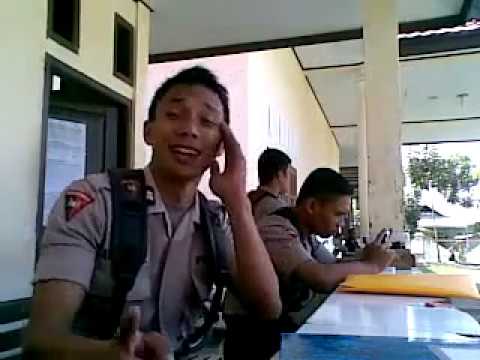
Youtube and Briptu Norman

YouTube and Briptu Norman


Youtube is not only known as a place to share videos and to watch them but also a place to gain popularity. One of people who luckily gains his popularity in youtube especially in Indonesia is Briptu Norman Kamaru. Yes, this member of the local police unexpectedly sky-rocketed with his unique and funny style of performing the Indian song.

Indian police in Bollywood movies may not be popular in Indonesia, but a local police officer is now enjoying his 15 minutes of fame after a YouTube video showing him dancing and lip-syncing Bollywood songs went viral on the web.

The amusing video showcases First. Brig. Norman Kamaru, a member of the Mobile Brigade force in Gorontalo, dressed in police uniform, lip-syncing and dancing to the “Chaiyya-Chaiyya” song by Indian movie star Sahrukh Khan while on duty guarding a police post. His head and hand gestures resemble those made by Indian actors, while his lip-syncing proved that he had actually memorized the lyrics.

His action has drew many attentions of viewers in Youtube; not only from Indonesia but also from abroad viewers. Briptu Norman himself acknowledge that He was just trying to entertain colleague at the post who appeared tired and bored. His video was uploaded first in Facebook; however, one person initiated to upload it to video sharing site Youtube. Then, guess what! He gained many appreciations from society as police officers In Indonesia are used to being known with their seriousness and fierce faces yet from what Norman had shown to public, it made that kind of view was faded away. That makes Briptu Norman gained many supports from public for his skill and friendliness as police officer.

Once again Youtube gives birth to a new cool star! We also knew the others who gain the same thing such as Justin Bieber etc.. It is the magic of internet and media. Who will be the next star? May be you!!

Let's see the video below!! Enjoy!!


Sources:


YouTube
TheJakartaPost

Monday, May 2, 2011

Idioms Quiz


Idioms Quiz


Let's learn idiom again. Learning idioms is very useful and fun! Let's take the quiz!


  1. Your suggestion for me is ............. Very helpful thank you!


  2. rain in summer.

    a drop in the bucket.

    a drop of water in the lake.


  3. Mr. Wena's task is........... ; I don't like it.


  4. as thunder in the daylight

    as rain in summer

    as no bed of roses


  5. Don't believe in him. He is just............ I know his life.


  6. dark horse

    like bad rose

    all talk and no trouser


  7. I don't want to buy this book because it costs...........


  8. an arm and a leg.

    whole body.

    all pounds.


  9. I don't understand his way! It seems that............


  10. there's question ih his mind.

    there's method in his madness.

    there's darkness in his life.


  11. He takes regular exercise to keep him..........


  12. in the good mood.

    in the pink.

    in blue.


  13. Yesterday's match was............. ; it was very tight.


  14. down to the road

    down and up

    down to the wire


  15. I don't want my son to be friends with Benny Jono. Benny is a.........


  16. bad egg.

    bad kid.

    bad choice.


  17. We need to get our ............ if we want our project to succeed.


  18. sheep in line

    cows out of field

    ducks in a row


  19. Don't talk to her for now because her .............


  20. hands like strom.

    smile like satan.

    face like thunder.


Good luck! and Enjoy!!


Thanks :)


Download


  • For explanation of the idioms, download the ebook here
    download


Saturday, April 30, 2011

You Could Have Heard a Pin Drop

You Could Have Heard a Pin Drop


Well, today's topic is an English idiom; that is You could have heard a pin drop.


You could have heard a pin drop is something that you say in order to describe a situation where there was complete silence, especially because people were very interested or very surprised by what was happening.


It's in the past form that is to point the action which had happened.
In simple words we can say that it was so quite that you could have heard a pin drop on the floor. Logically when a pin drops on the floor, the sound is usually unheard as a pin is too small to produce such a noise. A pin is a small piece of usually metal that's used to keep something in place like sticking a pieace of paper on your wooden board.


Example in sentence:


Margaret's presentation was very awesome; everybody was seriously watching her presentation. Honestly, you could have heard a pin drop when she talked in front. None seemed to make any noise as everyone wouldn't want to miss any points she mentioned.


Sources:


  • Listen the meaning
    download


  • Listen the example
    download


  • Download ebook
    download

Wednesday, August 18, 2010

My Word of The Day, Clamp up

Clamp down
*/klæmp daʊn/

*phrasal verb

*(clamp down on sth)

What does it mean?

  • to make a determined attempt to stop people from doing something bad or illegal
Example:
Indian security officials were concerned that BlackBerry's encrypted data could be used to coordinate acts against the state. They have clamped down on mobile phone operators in the wake of 2008 attacks that killed 166 people in Mumbai. The UAE, home to Gulf financial hub Dubai, said it would halt BlackBerry services until an "acceptable solution" was developed and applied.
---Yahoo News, ''BlackBerry users in UAE, Saudi may have services cut''

Etymology:

  • Origin: 1350–1400; ME (n.) < MD clampe clamp, cleat; c. MLG klampe

Synonyms

  • forbid , decline , prohibit , ban , clinch, clench, secure.

Antonyms

  • Allow, admit, accept, permit


Tuesday, August 17, 2010

My Word of The Day, Trumped-up

Trumped-up
/ˌtrʌmptˈʌp/

adjective [before noun]

What does it mean?

  • Faked, fabricated or falsely manufactured. Usually in the phrase trumped-up charges referring to legal accusation made for illegitimate reasons
Example:
The junior prosecutor has already been removed, but Mr Anwar says her alleged affair with the male witness is evidence of a conspiracy against him.
"It just supports our contention right from the beginning that this is all a farce, a politically motivated trial, trumped-up charges," he told reporters.
"This is an additional fact or evidence to support our case, to show the prosecution is not and cannot be impartial. "Mr Anwar is accused of sodomising his former male aide, Mr Az lan, in 2008. He strongly denies the charge.
---BBC News, ''Malaysia to pursue sodomy case against Anwar Ibrahim''

Synonyms:

  • trumped-up concocted, contrived, cooked-up (informal) fabricated, fake, false, falsified, invented, made-up, manufactured, phoneyor phony (informal) untrue

Antonyms:

  • actual, authentic, bona fide, genuine, real, sound, true, veritable


Monday, August 16, 2010

My Word of The Day, Grievous

Grievous
;/ˈgriː.vəs/

adjective *formal

What does it mean?

  • having very serious effects or causing great pain
Example:
Nadja Benaissa, 28, was speaking at the opening of her trial in the German city of Darmstadt."I am so sorry," Ms Benaissa told the court. However, she denied deliberately infecting anyone.
She faces a charge of grievous bodily harm for allegedly infecting one man. She has also been charged with attempted bodily harm for allegedly having sex with two other men who were not infected.If convicted, Ms Benaissa faces a prison sentence ranging from six months to 10 years. Quote from: bbc.co.uk

Etymology:

  • c.1300, from Anglo-Fr. grevous (O.Fr. grevos ), from grief

Synonyms:

  • afflicting, calamitous, damaging, distressing, dreadful, grave, harmful, heavy, hurtful, injurious, lamentable, oppressive, painful, severe, wounding, appalling, atrocious, deplorable, dreadful, egregious, flagrant, glaring, heinous, intolerable, lamentable, monstrous, offensive, outrageous, shameful, shocking, unbearable agonized, grief-stricken, heart-rending, mournful, pitiful, sorrowful, tragic

Antonyms:

  • delightful, glad, happy, insignificant, joyous, mild, pleasant, trivial, unimportant


Wednesday, August 11, 2010

My Word of the Day, Pervert

Pervert;
/pəˈvːt/
*verb [T] disapproving

What does it mean?

  • -to change something so that it is not what it was or should be, or to influence someone in a harmful way
  • -to act illegally to avoid punishment or to get the wrong person punished
Example:
If so, argues Fry, then the Qwerty keyboard and its inventor could be accused of "conspiracy to pervert the course of language and to limit the speed of creativity and language input, endangering billions with repetitive strain injury". Quoted from: BBC.co.uk

Etymology:

c.1300 (trans.), "to turn someone aside from a right religious belief to a false or erroneous one," from O.Fr.pervertir, from L.pervertere "corrupt, turn the wrong way, turn about," from per- "away" + vertere "to turn". Replaced nativefroward , which embodies the same image. The noun is attested from 1660s, "one who has forsaken a doctrine or system regarded as true, apostate;" psychological sense of "one who has a perversion of the sexual instinct" is attested from 1897 (Havelock Ellis), originally especially of homosexuals.

Synonyms:

  • deprave , corrupt, debauch, lead astray, spoil, warp, distort , misinterpret, twist, misrepresent, change, alter, spoil, garble


SuparNgeBLog

Tuesday, August 10, 2010

My Word of The Day, Aggravate

Aggravate
/ˈæg.rə.veɪt/
*verb [T]

What does it mean?

  • MAKE WORSE
    -to make a bad situation worse
    -to make a disease worse
  • ANNOY
    -informal: to annoy someone
    =Stop aggravating me, will you!
Example:
Putin added that the situation was aggravated by the fact that some important regions would not be able to start the winter-sowing campaign.The weather outlook is little changed for this week, with a slight drop in temperatures forecast for later in the week. Quoted from:Reuters

Etymology:

1520s, from pp. adj. aggravate (late 15c.), from L. aggravatus , pp. of aggravare "to render troublesome, to make heavy". Earlier in this sense was aggrave . To aggravate has properly only one meaning -- to make (an evil) worse or more serious. [Fowler]Phrase aggravating circumstances is recorded from 1790.

Synonyms:

  • add insult to injury, exacerbate, exaggerate, fan the flames of, heighten, increase, inflame, intensify, magnify, make worse, worsen, annoy

Antonyms:

  • alleviate, assuage, calm, diminish, ease, improve, lessen, mitigate, smooth, assuage, calm, pacify, please


Sunday, August 8, 2010

My Word Of The Day, Dissipate

Dissipate

/ˈdɪs.ɪ.peɪt/ verb [I or T] formal

What does it mean?

;

  • to (cause to) gradually disappear or waste

Example:

The well's suffocation coincided with the release of a federal report this week showing that only about a quarter of the oil lost to the leak remains in or along the shores of the Gulf, with the rest having dissipated or otherwise disappeared. The remaining 53 million gallons, though, would be enough alone to rank among the nation's worst spills. Quoted from:Yahoo! News

Etymology:

1530s, from L. dissipatus , pp. of dissipare "to spread abroad, scatter, disperse; squander, disintegrate," fromdis- "apart" ( seedis- ) + supare "to throw, scatter," from PIE *swep- "to throw, sling, cast" (cf. Lit.supu "to swing, rock," O.C.S. supo " to strew").

Synonyms:

  • disappear, dispel, disperse, dissolve, drive away, evaporate, scatter, vanish


Saturday, August 7, 2010

Color Idioms

Color Idioms Quiz

Answer all the questions that related about Color Idioms in English. Fill each gap with the following list of idioms. Good luck!


browned offin the pinksee redblack and bluewalk on the green mileoff color
out of the blueroll out of the red colorpink slipgreen with envyblack sheep♪ ☺ ♫


  1. Jack is now such a............in the team since he behaved violently in the last match.
  2. Frank got........after being hit by Jack.
  3. The coach gets bit.........with the changed behaviour of Jack recently.
  4. The brawl came.........that the coach itself was shocked by this ashamed incident.
  5. Someone says that Jack was..........with Frank as his lovely girl friend was coveted by Frank
  6. The way coach and friends.........made Jack detest Frank.
  7. Jack looks......... as he's very depressed of what he had done.
  8. Jack could receive.........after some fans demonstrated their dislike of Jack's behavior and asked him to leave the club
  9. Due to the incident, Jack may..........of resignation.
  10. Jack's mates.........of the incident and encourage other to take positive thing of it.
  11. After a week of intensive care, Frank's now........


The answers:


TELL ME MORE Language Learning Software

SuparNgeBLog


Vocabulary Quiz (Theme: Book)

Vacabulary quiz (theme: book)

Fill in the blanks using the word in the following list! Good luck!

anonymitypublisher
reservedprinted
blurbcatalogue
acknowledgeindex
low priced editionreserved
Author


  1. No one knows that the.........of the book is Andy Suvy. He intentionally uses...........because he doesn't want to be a popular person.
  2. All right..........prevents a book from being reproduced without permission of the............
  3. The experts estimate that the book was..........in 1890s.
  4. A good writer usually............any help he has got from other people in his books or essays.
  5. The........of the popular book finally released their............to public with main aim is to attract students and colleges' interest in reading books
  6. Read the........first whether it's good or not before deciding to buy the book so that it is worth for you.
  7. The readers of book sometimes refer to the...........when they want to find particular terms in a book.
  8. If you are confused where the books you are looking for located, you can ask the shopkeeper to get the...........of th books.

The answers


TELL ME MORE Language Learning Software

SuparNgeBLog


Friday, August 6, 2010

My Word of The Day, Audacious

Audacious

/ɔːˈdeɪ.ʃəs/

| adjective


What does it me?

  • Willing to take risks or to do sth shocking

Example:

According to The Mirror, Martin Broughton, part-time Liverpool Director of Sale, is to meet with Kenny Huang later this week in order to discuss his audacious plans to buy Liverpool FC.The Chinese businessman, head of a mega-rich Asian consortium is hell-bent on buying the club.He initially approached RBS about buying the debt that Hicks and Gillette incurred to buy the club but has now agreed to engage with Barclays Capital, who are in charge of the sale of the club, and with Chairman Broughton. Quoted from: here

Etymology:

1540s, "confident, intrepid," from L. audacia "daring, boldness , courage," fromaudax "bold, daring," from audere "to dare." Bad sense of "shameless" is attested from 1590s. L.audax also had a good and a bad sense and could mean "audacious, rash, foolhardy."

Synonyms:

  • adventurous, bold, brave, courageous, daredevil, daring, dauntless, death-defying, enterprising, fearless, intrepid, rash, reckless, risky, valiant, venturesome, assuming, brazen, cheeky, defiant, disrespectful, forward, fresh(informal) impertinent, impudent, insolent, in- your-face(Brit. slang) pert, presumptuous, sassy (U.S. informal)shameless

Antonyms:

  • careful, cautious, cowardly, frightened, guarded, prudent, timid, unadventurous, unenterprising, deferential, gracious, tactful, unassuming


SuparNgeBLog


Thursday, August 5, 2010

My Word of The Day, Ensue

Ensue

/ɪnˈsjuː/

verb [I] formal

What does it mean?

  • to happen after something else, especially as a result of it
  • happen after or as a result of another event

Example:

Locally the focus has been on the actions of dissident republicans in encouraging young nationalists onto the streets. But in England many fail to understand why tradition should justify any Orange parade proceeding down a route where trouble might ensue.Quoted from:bbc.co.uk

Etymology

late 14c., from O.Fr. ensivre "follow close upon," from L.L. insequere , from L. insequi "to pursue," from in- "upon" + sequi "follow".

Synonyms:

come after, come next, follow, issue, proceed, result, stem, succeed.

Antonyms:

Antecede, come first, forerun, go ahead of, go before, introduce, lead, pave the way, precede, usher


Save $100 on orders over $2,999.99 Use Promo Code SAVE100

SuparNgeBLog

MyMeeting123: Easy and Affordable Web Meeting Solution. Price starts from $17.95/month. Sign up now!

Phrasal Verbs about Money, quiz

Phrase Verbs about Money Quiz

Fill the gap of each sentence with appropriate phrasal verbs according to the meaning given. You can check the answers inside the boxes. Good luck!


  1. Two businessmen have offered to _______ the club. (to do something or to help someone out of trouble, especially financial problem)
    1. pay back
    2. get by
    3. bail out
    4. use up
  2. The bank forces the club to_____all the debt in in a week to go. (to return money owed to someone)
    1. get by
    2. pay back
    3. bail out
    4. save up
  3. He likes to_____ his money for he thinks that he will need it a lot in the future. (to keep money for a large expense in the future)
    1. bail out
    2. get by
    3. use up
    4. save up
  4. He used to_____his money so that he is now so poor. (to use all of sth so that there is none left)
    1. save up
    2. use up
    3. dip into
    4. pay off
  5. Students often have to_____ their pockets for buying new school books. (to spend part of saved money)
    1. dip into
    2. run into
    3. pay back
    4. pay off
  6. He has to_____all his debt or he will be put in jail.(to give all your the money you owe them)
    1. pay over
    2. pay off
    3. pay in
    4. pay attention


Save $100 on orders over $2,999.99 Use Promo Code SAVE100

SuparNgeBLog

MyMeeting123: Easy and Affordable Web Meeting Solution. Price starts from $17.95/month. Sign up now!

Weather Idioms quiz

Wheater Idioms

Answer the following qustions that're all about weather idioms in English. You can check the answers inside the boxes. Good luck!


  1. When you know that something is about to go horribly wrong, but hasn't just yet, then you are in:
    1. Right as rain
    2. Rainy day
    3. Quiet before the Storm
    4. Storm in a teacup
  2. Only one of the following idioms is really about the weather. Which one?
    1. under a cloud
    2. every cloud has a silver lining
    3. Face like thunder
    4. it's raining cats and dogs
  3. 'The class room was in mess; the teacher suspected John as the culprit as none would like to be responsible for it. In this case, John can be described that he is:
    1. under the weather
    2. under a cloud
    3. a storm in a teacup
    4. under the sun shines
  4. If a problem becomes far greater than it really is, it can be described as:
    1. a great thunder
    2. a storm in a teacup
    3. twisting in the wind
    4. a storm in the sun
  5. ' John has defied his promise to return the money he borrowed from Shanty; it makes her very angry with him. Shanty can be described as though she has:
    1. nose like sun
    2. mouth like storm
    3. fingers like star
    4. face like thunder
  6. When I'm in trouble, my friend gives me advice that it is always possible to get something positive out of a situation, no matter how unpleasant, difficult or even painful it might seem. What is the right idiom to express my friend's advice?
    1. every rose has its thorn
    2. When it rains, it pours
    3. every cloud has a silver lining
    4. Sail close to the wind


Save $100 on orders over $2,999.99 Use Promo Code SAVE100

SuparNgeBLog

MyMeeting123: Easy and Affordable Web Meeting Solution. Price starts from $17.95/month. Sign up now!

Wednesday, August 4, 2010

My Word Of The Day, Envisage

Envisage

Envisage: /ɪnˈvɪz.ɪdʒ/ verb [T] ( US also envision) slightly formal

What does it mean?

  • To imagine or expect something in the future, especially something good
  • To form a mental picture of something or someone you have never seen

Example:

"I can envisage a day where in the north-west of England we have a Premier League school where a number of clubs have their boys. | Quoted from: Reuters

Etymology:

1820, from Fr. envisager "look in the face of," from en- " cause to" visage "face."

Synonyms

  • conceive (of), conceptualize, contemplate, fancy, imagine, picture, think up, visualize anticipate, envision, foresee, predict, see


Save $100 on orders over $2,999.99 Use Promo Code SAVE100

SuparNgeBLog

MyMeeting123: Easy and Affordable Web Meeting Solution. Price starts from $17.95/month. Sign up now!

Tuesday, August 3, 2010

My Word of The Day, Divulge

Divulge

/daɪˈvʌldʒ/ verb [T]


What does it mean?

  • sth (to sb) (formal) to give sb information that is supposed to be secret; to make something secret known

Example:

Lady Gaga has admitted that she takes cocaine, describing her usage as "occasional". In an interview with US magazine Vanity Fair, the singer divulged that she used the drug "maybe a couple of times a year". However, the 24-year-old Poker Face singer discouraged her fans from copying her. ✽ Quoted from: ✽ BBC News

Etymology:

mid-15c., from L. divulgare "publish, make common," from dis- "apart" (see dis- ) + vulgare "make common property," fromvulgus "common people"

c.1300, "divulge, reveal, disclose," from O.Fr. descovrir " uncover, unroof, unveil, reveal, betray," from L.L.discooperire , from L. dis- "opposite of" (see dis- ) + cooperire "to cover up" (seecover ). At first with a sense of betrayal or malicious exposure (discoverer originally meant "informant"); the meaning "to obtain knowledge or sight of what was not known" is from 1550s.


Synonyms:

Reveal , tell, make known, disclose, let drop, give away, let slip show, unwarp, let on, bring out, reveal, discover, expose, break, give away, let out

Antonyms:

Conceal, hide, keep secret


Save $100 on orders over $2,999.99 Use Promo Code SAVE100

SuparNgeBLog


MyMeeting123: Easy and Affordable Web Meeting Solution. Price starts from $17.95/month. Sign up now!

Monday, August 2, 2010

My Word Of The Day, Savvy

Savvy /ˈsæv.i/

Noun, adjective (informal)


My word of the day is ''savvy''.

What does it mean?

  • noun [U] (informal): practical knowledge or understanding of sth: political savvy
  • adjective (savvier, savviest) (informal, especially NorthAmE): having practical knowledge and understanding of sth

Example:

The researchers are the first to admit the findings are not terribly scientific -- Twitter users tend to be tech-savvy, live in large cities and are a fraction of the total population -- but according to the results they have potential as a tool for providing real-time analysis of critical issues.
Quoted from:Reuters ↑↓

Synonyms : shrewdness , practicality, knowledge, perception, understanding, know-how

Antonym : ignorance


Etymology:

savvy: 1785, as a noun, "practical sense, intelligence;" also a verb, " to know, to understand;" W. Indies pidgin borrowing of Fr.savez(-vous)? "do you know?" or Sp. sabe (usted) "you know, " both from V.L.*sapere, from Latin. sapere "be wise, be knowing" (seesapient ).

The adj. is first recorded 1905, from the noun.streetwise; 1965, from street + wise (adj.) "smart, savvy."


Twitter Facebook Google Email Favorites More